Updated: 2026-05-15 20:30:17 (UTC+9) Ver.7

2026-05-15 20:22 (UTC+9),
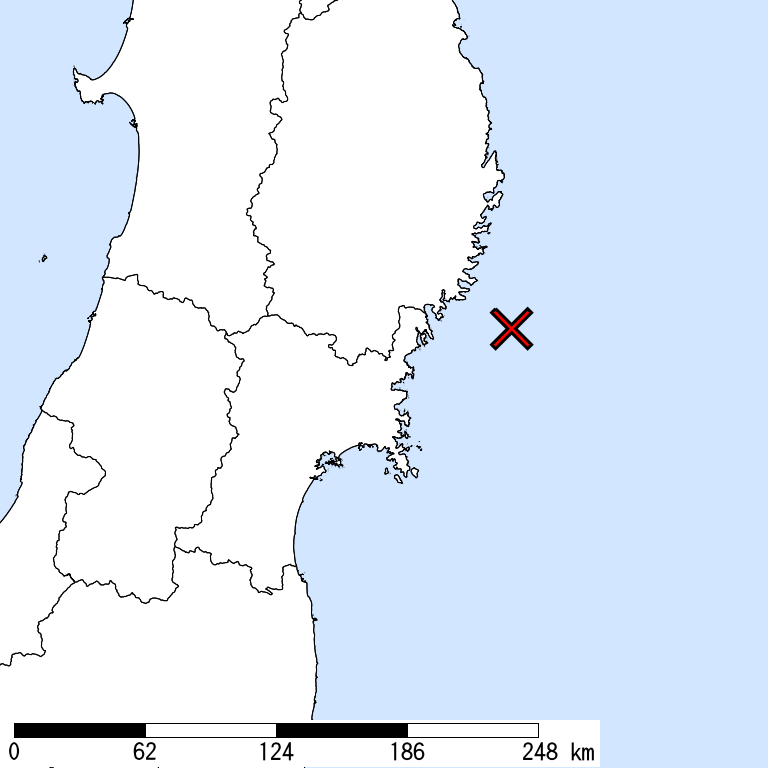
OFF MIYAGI,
50km Depth,
M 6.3
by JMA
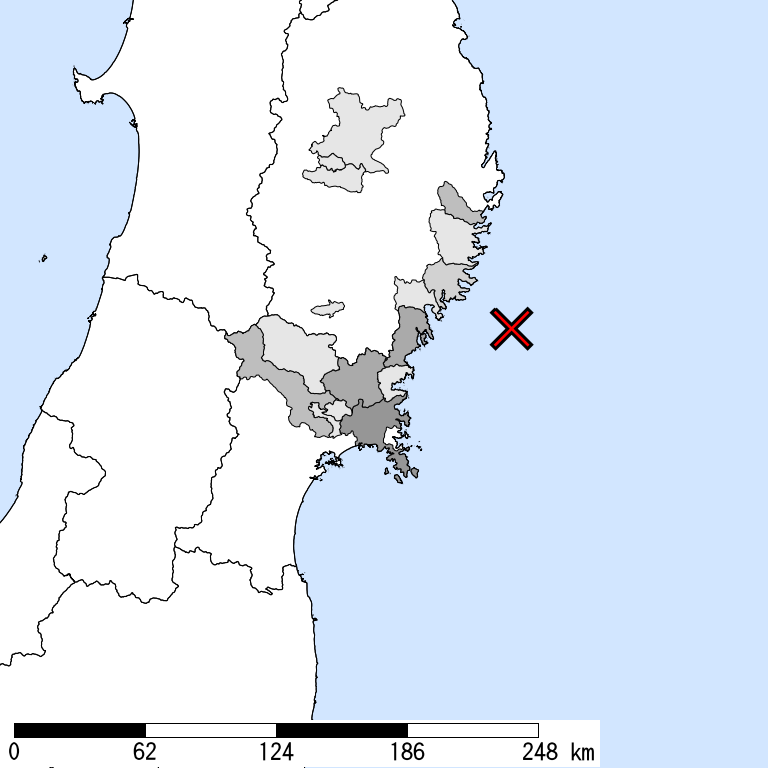
Is Distribution
Maximum Observed Is:5-
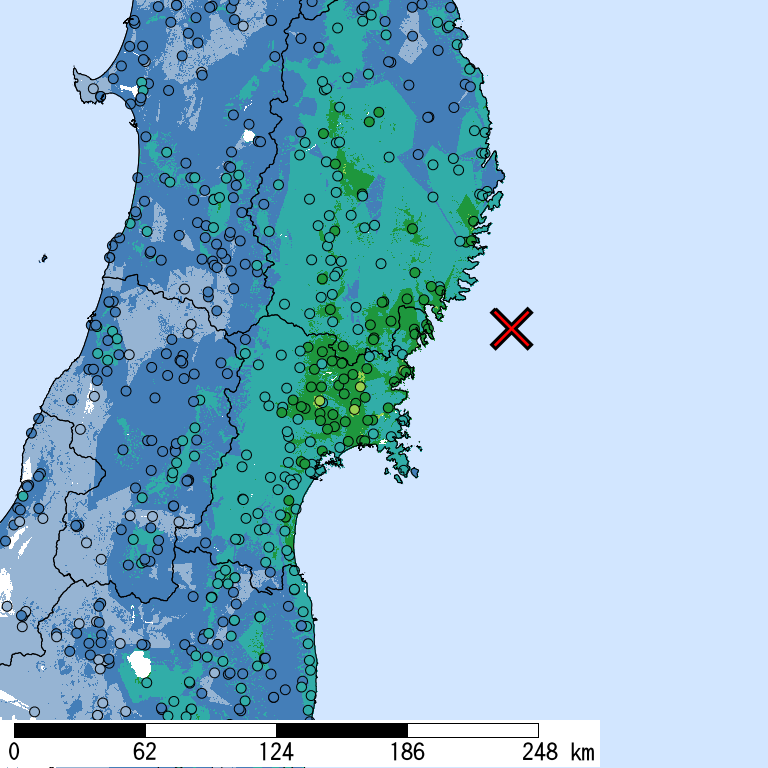
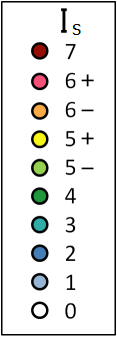
Seismic Intensity (Is) distribution is estimated from the observed data (circles) of NIED K-NET, KiK-net, JMA, and local governments that had been collected by 2026/05/15 20:29:26.
Estimated Is for Major Cities
| Max. Obs. Is | Histogram of Estimated Is |
Municipality Show All Data | Nighttime Population | Distance [km] |
| 5- | Osaki,Miyagi | 130,000 | 105 | |
| 5- | Ishinomaki,Miyagi | 150,000 | 86 | |
| 5- | Tome,Miyagi | 82,000 | 82 | |
| 4 | Ichinoseki,Iwate | 120,000 | 84 | |
| 4 | Morioka,Iwate | 300,000 | 121 | |
| 4 | Oshu,Iwate | 120,000 | 87 | |
| 3 | Miyagino,Sendai,Miyagi | 190,000 | 125 | |
| 3 | Koriyama,Fukushima | 340,000 | 225 | |
| 3 | Hachinohe,Aomori | 230,000 | 187 | |
| 3 | Izumi,Sendai,Miyagi | 220,000 | 123 | |
| 3 | Aoba,Sendai,Miyagi | 310,000 | 127 | |
| 3 | Wakabayashi,Sendai,Miyagi | 130,000 | 127 | |
| 3 | Fukushima,Fukushima | 290,000 | 190 | |
| 3 | Iwaki,Fukushima | 350,000 | 231 | |
| 3 | Akita,Akita | 320,000 | 194 | |
| 3 | Tsuruoka,Yamagata | 130,000 | 198 | |
| 3 | Taihaku,Sendai,Miyagi | 220,000 | 130 | |
| 3 | Sakata,Yamagata | 110,000 | 196 | |
| 3 | Yamagata,Yamagata | 250,000 | 169 | |
| 3 | Kasukabe,Saitama | 230,000 | 385 |
The histogram shows frequency distribution of estimated Is derived from interpolation of the observation with 250-m mesh. The daytime and nighttime correspond to 9:00-18:59 and 19:00-8:59, respectively. The distance is measured from the epicenter to the center of the municipality.
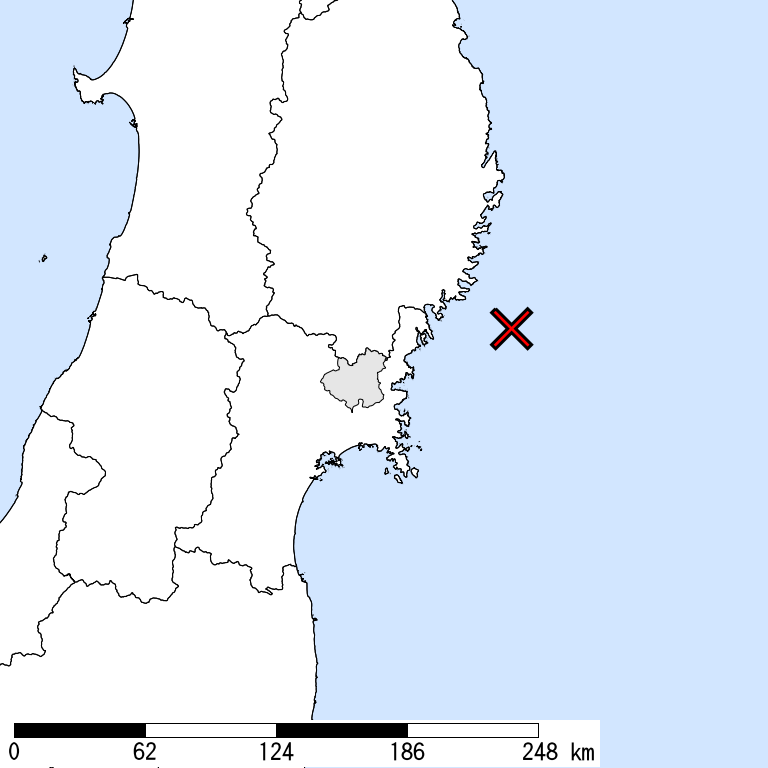
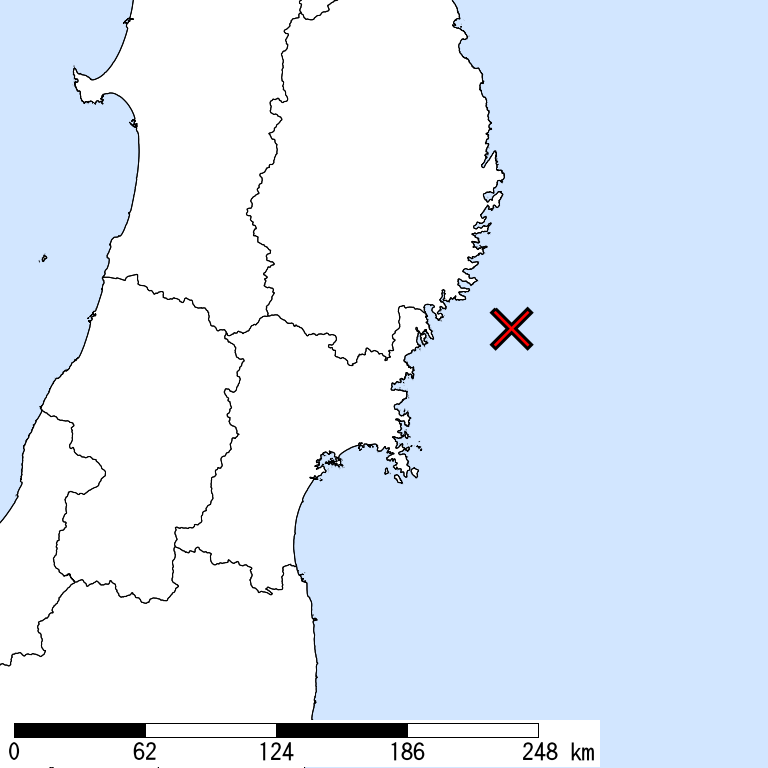
Is Exposed-Population Estimates of Each City
5- or greater
|
5+ or greater
|
6- or greater
Not Available
|
6+ or greater
Not Available
|

| Show All Data | ||||
| 5- or greater |
5+ or greater |
6- or greater |
6+ or greater |
|
| Whole of Japan | 50,000 | < 1,000 | ||
| Iwate Prefecture | 5,000 | |||
| Morioka,Iwate | < 1,000 | |||
| Ofunato,Iwate | 2,000 | |||
| Rikuzentakata,Iwate | < 1,000 | |||
| Kamaishi,Iwate | < 1,000 | |||
| Shiwa,Shiwa,Iwate | < 1,000 | |||
| Yahaba,Shiwa,Iwate | < 1,000 | |||
| Hiraizumi,Nishiiwai,Iwate | < 1,000 | |||
| Otsuchi,Kamihei,Iwate | 2,000 | |||
| Miyagi Prefecture | 50,000 | < 1,000 | ||
| Ishinomaki,Miyagi | 20,000 | |||
| Kesennuma,Miyagi | 10,000 | |||
| Tome,Miyagi | 10,000 | < 1,000 | ||
| Kurihara,Miyagi | < 1,000 | |||
| Osaki,Miyagi | 5,000 | |||
| Wakuya,Toda,Miyagi | < 1,000 | |||
| Misato,Toda,Miyagi | 1,000 | |||
| Minamisanriku,Motoyoshi,Miyagi | < 1,000 |
The summation of the exposed population for each city does not necessarily equal to that of the prefecture or whole of Japan.
Major Historical Damaging Earthquakes in This Region
| Year | Region | M | Damage |
| 2003 | Off Miyagi | 7.1 | The intraslab earthquake with a focal depth of 70 km. 174 injured, 2 houses collapsed, 21 partially destroyed. |
| 2003 | Northern Miyagi | 6.4 | The inland crustal earthquake preceded by a foreshock (M5.6) and followed by an aftershock (M5.5) on the same day. 677 injured, 1,276 houses collapsed, 3,809 partially destroyed. |
| 2005 | Off Miyagi | 7.2 | 100 injured, 1 house collapsed, 0 partially collapsed. Maximum Is was 6-. A tsunami was observed along the Pacific coast of Tohoku (with a maximum height of 13 cm). |
| 2008 | Northern Coast, Iwate | 6.8 | The intraslab earthquake with the normal fault of the Pacific plate (depth of 108 km). 1 dead, 211 injured, 1 house collapsed, 0 partially destroyed (as of January 2009). Maximum Is was 6-. |
| 2011 | Off Sanriku | 9.0 | 2011 off the Pacific coast of Tohoku Earthquake,Mega-thrust earthquake in the subduction zone along the Japan trench from off the middle of Sanriku to off of Ibaraki. 19,418 dead, 2,592 missing, 6,220 injured, 121,809 houses collapsed, 278,496 partially destroyed (as of March 2016; including some damage by aftershocks and induced earthquakes). 90% of fatalities were drownings. Most of the damage including nuclear disaster was caused by a large tsunami (height of about 40 m, according to field investigation). Maximum Is was 7. The damage by ground motion was relatively less significant than that by tsunami. |
| 2011 | Off Miyagi | 7.2 | The intraslab earthquake with the reverse fault of the Pacific plate, occuring around the epicentral area of the 2011 off the Pacific Coast of Tohoku Earthquake. 4 dead, 296 injured, over 36 houses collapsed, over 27 partially collapsed. Maximum Is was 6+. |
Reference: National Astronomical Observatory of Japan, Chronological Scientific Tables, Maruzen, (2017) *partially extracted
Seismic Hazard Information of J-SHIS
J-SHIS is a Web service by NIED, to help prevent and prepare for earthquake disaster by providing a public portal for seismic hazard information across Japan.